Budget Planning Information and Request Forms
Basic Elements of the UHD Planning and Budget Development Process
Planning should be transparent
Effective planning requires an on-going dialogue between unit personnel and their supervisors, and between deans, chairs and faculty. The planning web pages and calendars list the different stages in the planning process.
Planning should be strategic
Initiative requests should help make UHD a stronger institution, more efficient and more capable of achieving its strategic priorities.
Any request for funding should state how the initiative will align with at least one of UHD’s Strategic Goals.
Planning goals should be measurable
In proposing their planning initiatives, units should clearly state what they are trying to accomplish and the measurable outcomes.
Plans should identify total initiative/project costs
Unit plans should identify the total costs to the university for their proposed initiatives/projects including fringe benefits and additional overhead costs for IT, facilities, library, etc.
Unit planning should analyze the best use of all possible resources
New resources are limited in the current public higher education environment. Undergraduate tuition and fee rates in Texas have remained unchanged since FY2022 because of a directive from Governor Abbott to keep higher education affordable for students and families. With no tuition and fee rate increases, and state appropriations being determined by legislators, significant increases in resources must come from increases in enrollment. With enrollment remaining steady, tuition & fee revenues will be limited and largely tied to the inflation rate.
Given this, plans should examine the possibility of funding new initiatives through gifts, state and federal-funded grants, the reallocation of existing base budgets, or fund balance.
Unit Initiative Requests on Operating Funds
Operating Funds are the university’s centrally allocated sources from state appropriation, tuition, and fee revenues that fund general university operations, which include faculty salaries, department operating expenses, instructional administration, student services, scholarships and financial aid, research and institutional support.
The University Budget Advisory Committee (UBAC) submits budget recommendations associated with the university’s centrally allocated sources and not for sources that belong to units or colleges such as differential designated tuition, fees, or sales & services.
Initiatives requested by units to be funded by the university usually involve a continuing commitment and, if approved, become part of a unit’s base budget. Initiative requests on operating funds can establish funding or increase funding for department operating expenses, positions, or programs.
All requests for new positions or salary adjustments must be listed on the operating initiative request form and include fringe benefit costs.
If an operating initiative is for a one-time only expense, this should be clearly noted in its description.
Unit Initiative Requests on Higher Education Funds (HEF)
Higher Education Funds (HEF) are appropriated by the state every ten years for the next ten fiscal years. However, the state can evaluate the HEF appropriations after five years and can adjust the allocations for the next five fiscal years.
FY2026 was the start of the new ten-year HEF allocation cycle. The university’s HEF allocation may change for FY2031.
According to Article VII, Section 17(a) of the Texas Constitution, Higher Education Funds are appropriated for the following purposes:
a. Acquisition of land, either with or without permanent improvements
b. Construction and equipping of buildings or other permanent improvements (including furniture, electronic equipment, lab equipment, etc.)
c. Major repair or rehabilitation of buildings or other permanent improvements
d. Acquisition of capital equipment, library books, and library materials
e. Payment of principal and interest on bonds issued under this authority.
Initiatives approved to be funded by HEF do not become part of a unit’s base budget, although the institution has made a commitment to provide ongoing HEF support in several areas of university operations (ex. Library, Facilities Management, Information Technology).
Budget Request Forms
This form is a component of UHD's annual budget planning and development cycle.
When directed by the appropriate division leadership, department heads complete and submit the Unit Initiative Request Form to their supervisors.
Initiative requests are ranked by priority at the college level and submitted to the appropriate Vice President.
Each Vice President will consolidate and rank their division's initiative requests by priority and share with the University Budget Advisory Committee for consideration.
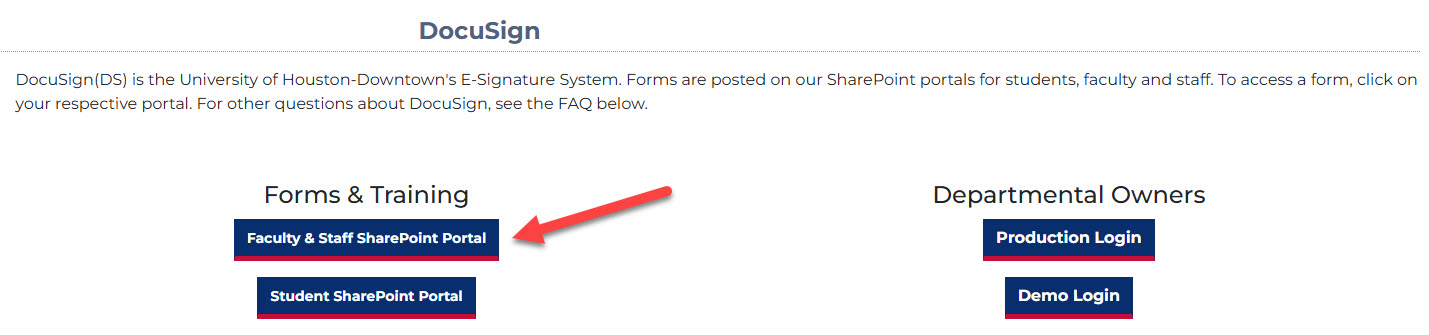
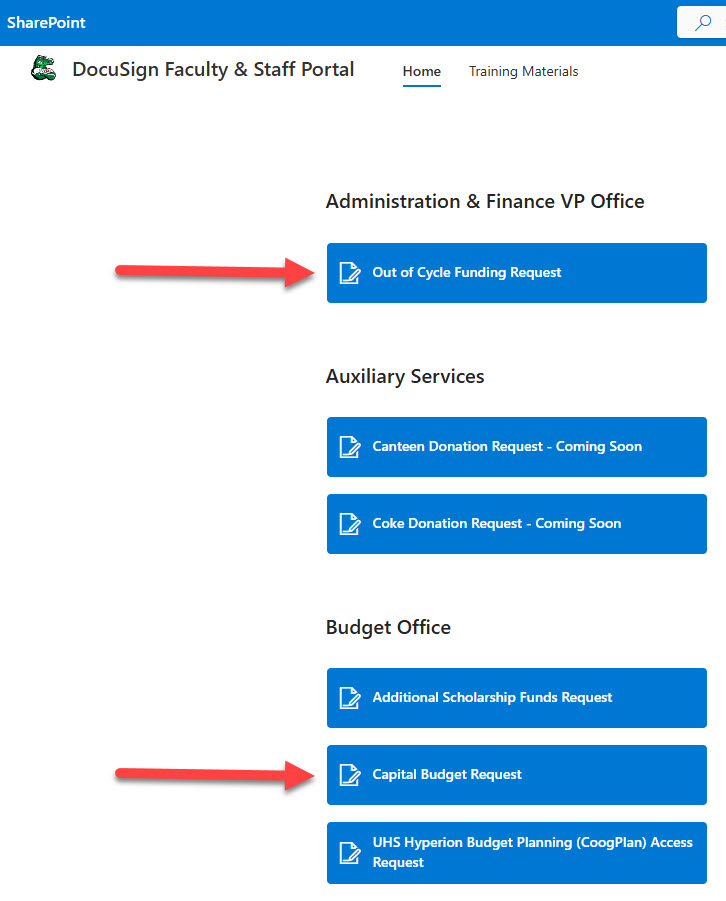
Capital Facilities Project Budget Request (DocuSign)
This form is a component of UHD's annual budget planning and development cycle. If for the next fiscal year, a unit would like to request that the university provides funds to support a capital facilities project for their space involving renovations, expansion or enhancements.
Submission due in October of each year via DocuSign.
The early call for capital project funding aligns it with the university's annual budget development cycle and allows the Space Planning Committee to review the project’s viability, provide realistic cost estimates and assist the Facilities Management department with scheduling. Capital planning and budgeting is essential for long-term institutional planning and supports the university’s ongoing commitment to enhancing facilities and infrastructure.
The request may be submitted by business administrators or unit heads and will route to the appropriate division Vice President for approval.
Once the Space Planning Committee determines which projects are viable, the University Budget Advisory Committee will recommend the appropriate fund source for the approved projects.
Facilities capital project requests include the following updates to a campus building:
- Major Space Renovation (removing or adding walls, doors, and windows)
- Refresh of Office, Classroom, Laboratory Classroom, Conference Room, and Break Room
- Furniture/Furnishings
- Carpet
- Major Paint Project
Out of Cycle Funding Request (DocuSign)
This form is NOT a component of UHD's annual budget planning and development cycle.
The purpose of this form is to request funding from the university during the fiscal year, as needed, in an effort to eliminate funding requests through email.
All requests will route to the appropriate division Vice President for approval and subsequently to the Vice President of Administration and Finance for final approval.